For many small and growing businesses, tendering can feel like something designed for larger organisations with dedicated bid teams, specialist writers and people whose entire job is managing procurement opportunities.
That can make tendering seem inaccessible before a business has even looked at what opportunities are available.
In reality, some very successful tendering journeys start with a business owner, a subject matter expert and a willingness to learn. What matters isn’t necessarily the size of the team behind the submission. It’s whether the business has the right knowledge, processes, preparation and support to compete effectively.
What Does a Tender Actually Need?
Every tender is different, but ultimately a buyer needs enough information and evidence to confidently assess whether your business can deliver the contract.
That information may come from several people across the business. The owner might understand the company’s strategy and customer relationships, an operations manager might know exactly how the service will be delivered, while someone responsible for finance may hold the commercial information needed for the submission.
In a larger organisation, a Bid Manager may coordinate all of those contributors internally. In a smaller business, the same knowledge often exists; it simply sits with people who have other day jobs.
The challenge is bringing that information together and turning it into a compliant, persuasive submission.

You Don’t Have to Build the Capability In-House
Employing a full-time Bid Manager can make sense for businesses tendering frequently enough to justify dedicated internal resource. For many SMEs, however, that isn’t necessarily the right model.
A business may only pursue a handful of significant opportunities each year. Others may tender more regularly but find that demand fluctuates, with quiet periods followed by several opportunities landing at once.
External or Fractional bid support allows businesses to access additional expertise and capacity when they need it without necessarily creating a permanent internal function.
That support can also look very different depending on the business. Some organisations need help finding suitable opportunities. Others are perfectly capable of writing their own submissions but want an independent review before they submit. Some need someone to manage an entire tender from initial review through to final submission. There are also some who prefer to offload the work entirely to outsourced bid teams.
The aim shouldn’t be to introduce unnecessary layers into the process. It should be to fill the gaps that actually exist.
Your Internal Knowledge Still Matters
External tender support doesn’t replace the expertise within your business.
Nobody understands your services, customers, operational challenges and previous successes better than the people delivering them every day. That knowledge is often exactly what makes a tender response credible.
The role of bid support is to help extract that information, identify the strongest evidence and shape it around what the evaluator has actually asked.
For example, a technical expert might explain precisely how a service operates but have little experience translating that into a scored tender response. A Bid Manager can work with them to retain the technical substance while ensuring the answer clearly addresses the requirement, demonstrates evidence and explains the benefit to the customer.
It becomes a collaborative process rather than simply handing the tender to somebody outside the business.
Tendering Capacity Can Grow With the Business
The support a business needs when it submits its first tender may be very different from what it needs two years later.
Initially, that might mean understanding the process, getting documentation organised and receiving hands-on support with individual opportunities. As experience grows, the business may become increasingly confident managing parts of the process internally.
Equally, successful tendering can create a different challenge: capacity.
Winning work often encourages businesses to pursue more opportunities, and eventually there may be enough tender activity to justify dedicated internal resource. Until then, flexible support can provide access to bid management expertise without requiring the business to build a full bid function before it actually needs one.
Need Additional Tendering Capacity?
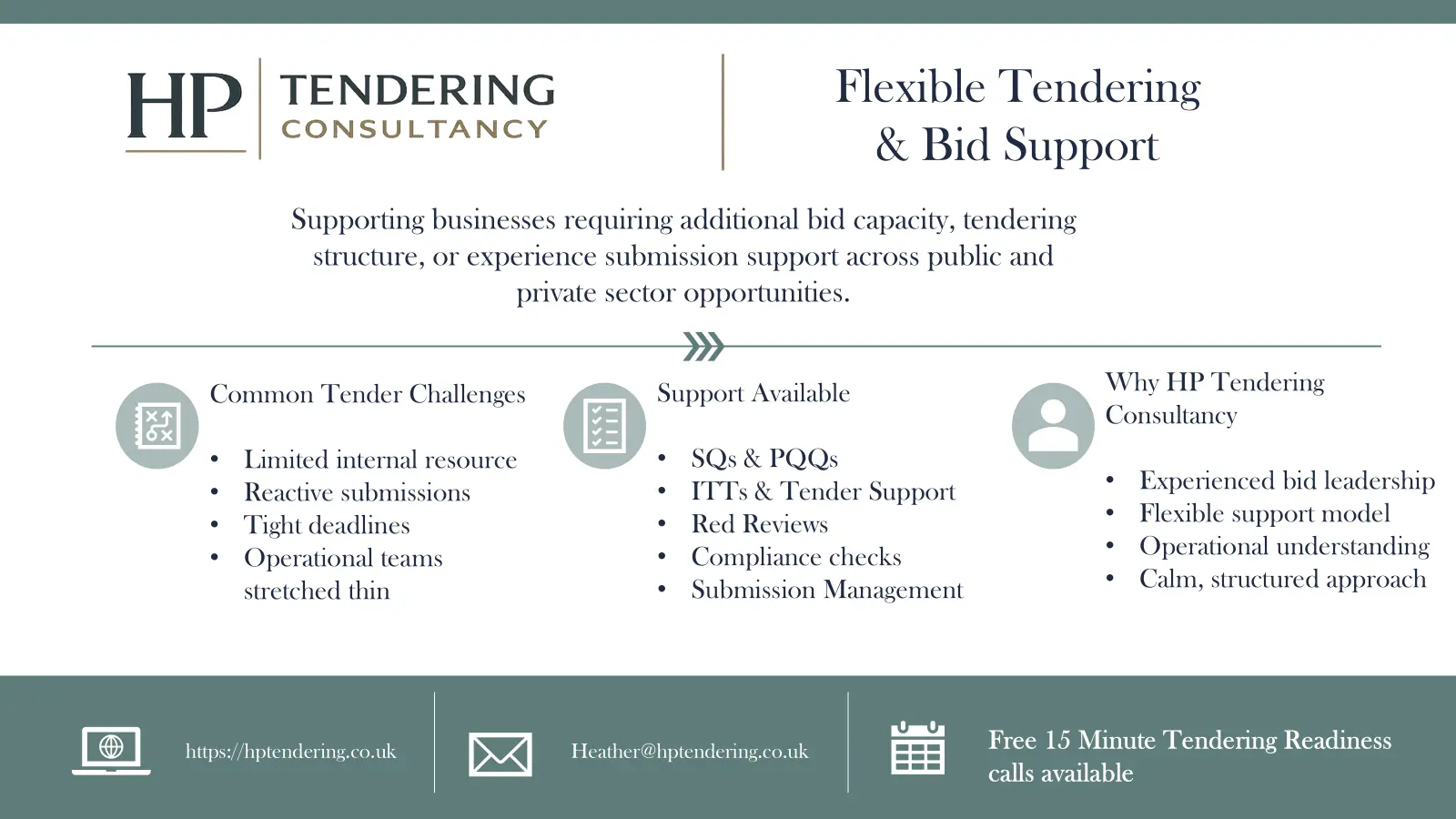
HP Tendering Consultancy provides flexible tendering and bid support for businesses that don’t necessarily need, or want, a full-time internal bid team.
Support can range from tender searches and bid reviews through to individual tender submissions, bid management and additional capacity alongside your existing business.
If you’re considering tendering but aren’t sure what level of support your business actually needs, get in touch to discuss where you are now and where the gaps might be.